

Am I having Urinary Tract Infection again?
Urinary Tract Infections (UTI) are commonly caused by bacteria especially the species Escherichia coli (E.coli) that ascend up the urethra into the urinary tract. Almost all women will have at least one episode of this infection. Some unlucky ones will have recurrent UTIs.
First let’s look at some common Symptoms and signs

Frequent urination throughout the day and night
Urinating more frequently than normal is a common symptoms. Sometimes the urge to urinate is so strong it keeps people up at night.
Strong urge to urinate, but only a few painful drops pass out
Burning or painful sensation during urination
Bacterial proliferation in the bladder or urethra can cause pain and make it difficult to urinate. People who have UTIs commonly feel a burning sensation upon urination.
Urine is cloudy, dark or blood-tinged and smells strong or unpleasant
Pain in the lower abdomen, back or flank *
Nausea or vomiting *
Fever or chills *
* These symptoms may indicate a more serious infection that require immediate medical treatment
UTI can be diagnosed through urine sampling. Let’s understand how do we test it.
BioTest Urinary Tract Infection Test Kit is a dip and read test based on urine specimen. There are three elements that the test kit check on in order to diagnose if you are indeed having a urinary tract infection.
First, we check for Leukocytes in urine.
Leukocytes or also refer to as white blood cells are a type of blood cells that are responsible for defending the body against any invader. So leukocytes is considered as a first sign for any infection in the body. When we find leukocytes in urine, it indicates that the infection is taking place somewhere in the urinary tract.
Next, we check for Red Blood Cells in urine.
When infection occurs, leukocytes cells move from capillaries around the urinary tract and enter the lumen of it to kill the bacteria present there. This movement may be some times associated with the movement of red blood cells due to the increased permeability of the capillaries. This increased permeability is important to facilitate the movement of white blood cells. So finding the red blood cells on top of the leukocytes further confirms UTI.
Finally, we check for Nitrite in urine.
Certain types of Bacteria (among them the E.coli which is often the culprit for causing UTI) have the ability to generate Nitrite. Hence with this fact in hand, a positive presence of Nitrite in urine often indicate trace of bacteria in urine.
It’s Easy
The BioTest Urinary Tract Infection Test Kit box include a urine collection cup. Just collect your urine, then dip the test and take it out immediately.
It’s Fast
Compared the colour of the strip with the colour chart at the back of box. Read the interpretation in the Instruction for Use provided inside the box.
It’s Reliable
The test is highly accurate and it is the same test being used by physicians and laboratory to perform urine check.
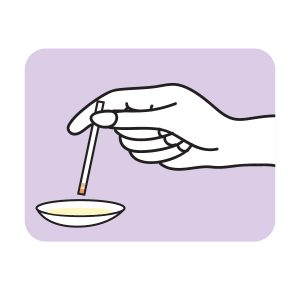
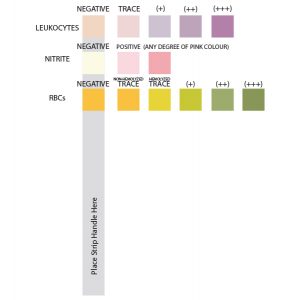
Do remember to read the instructions clearly before performing the test to ensure that you understand how to use the test, how to immediately read the result (as the colour result on the test is considered void after a few minutes due to humidity and contamination from the air) and finally where to find the result interpretation.
Q Is there any changes on the appearance or colour of urine that may indicate UTI?
A In case of severe infection, the urine is cloudy due to the presence of large number of bacteria and leukocytes. As for the colour, it will be more to a reddish colour in the presence of blood. However, small amount of blood will not affect the colour. An important point in this regard is that this appearance may be associated with other conditions such as kidney stones. So, performing a more specific test is advised.
Q How kidney stones and prostate gland enlargement increase the risk of UTI?
A These two conditions will result in slowing the urine flow out of the body, which will give bacteria better chance to get inside the urinary tract and cause infection.
Q How is UTI treated?
A UTIs are treated with antibacterial drugs. The choice of drug and length of treatment should be determined by a physician and depends on the patient history and the urine tests that identify the offending bacteria. The sensitivity test is especially useful in helping doctors to select the most effective drugs.
Q How long it takes to treat a UTI?
A Often, UTI can be cured within 1 or 2 days of treatment. Still, many doctors ask their patients to take antibiotics for a week or two to ensure that the infection has been completely cured. Patients also need longer treatment with infections caused by Mycoplasma or Chlamydia. In men, doctors usually recommend longer therapy than in women. This is done to prevent infections of the prostate gland since prostate infections are harder to cure because antibiotics are unable to penetrate infected prostate tissue effectively.
Q How can I monitor UTI therapy?
A Using BioTest Urinary Tract Infection Test Kit, you can redo the test after treatment and monitor the result using the result chart.
Q Will UTI come back?
A Most healthy women do not have repeat infections. However, about one out of every five women who get a UTI will get another one. Some women get three or more UTIs a year. Men get repeat infection more frequently. Anyone who has diabetes or a problem that makes it difficult to urinate may get repeat infections.
Q How can I keep from getting more UTIs?
A Changing some of your daily habits may help you avoid UTIs.
- Drink lots of fluids to flush the bacteria from your system. Water is best. Have 6-8 glasses of water per day.
- Drink cranberry juice or take vitamin C. Both increase the acid in your urine so bacteria cannot grow easily. Cranberry juice also makes your bladder wall slippery, so bacteria cannot stick to it.
- Urinate frequently and go when your first feel the urge. Bacteria can grow when urine stays in the bladder too long.
- Wear cotton underwear and loose-fitting cloths so that air can keep the area dry. Avoid tight-fitting jeans and nylon underwear, which trap moisture and help bacteria grow.
- Take showers instead of tub baths.
Download step by step instruction for use
English
Bahasa Malaysia
Tagalog
Thai
Arabic
BioTest Product Range
Pregnancy
Ovulation
Menopause
Diabetes
UTI
Kidney Function
Liver Function
Ketosis Test Kit
Multi-Drug Test